
Framing nails screws and connectors in Minnesota
Published October 28, 2026 · Reviewed October 28, 2026
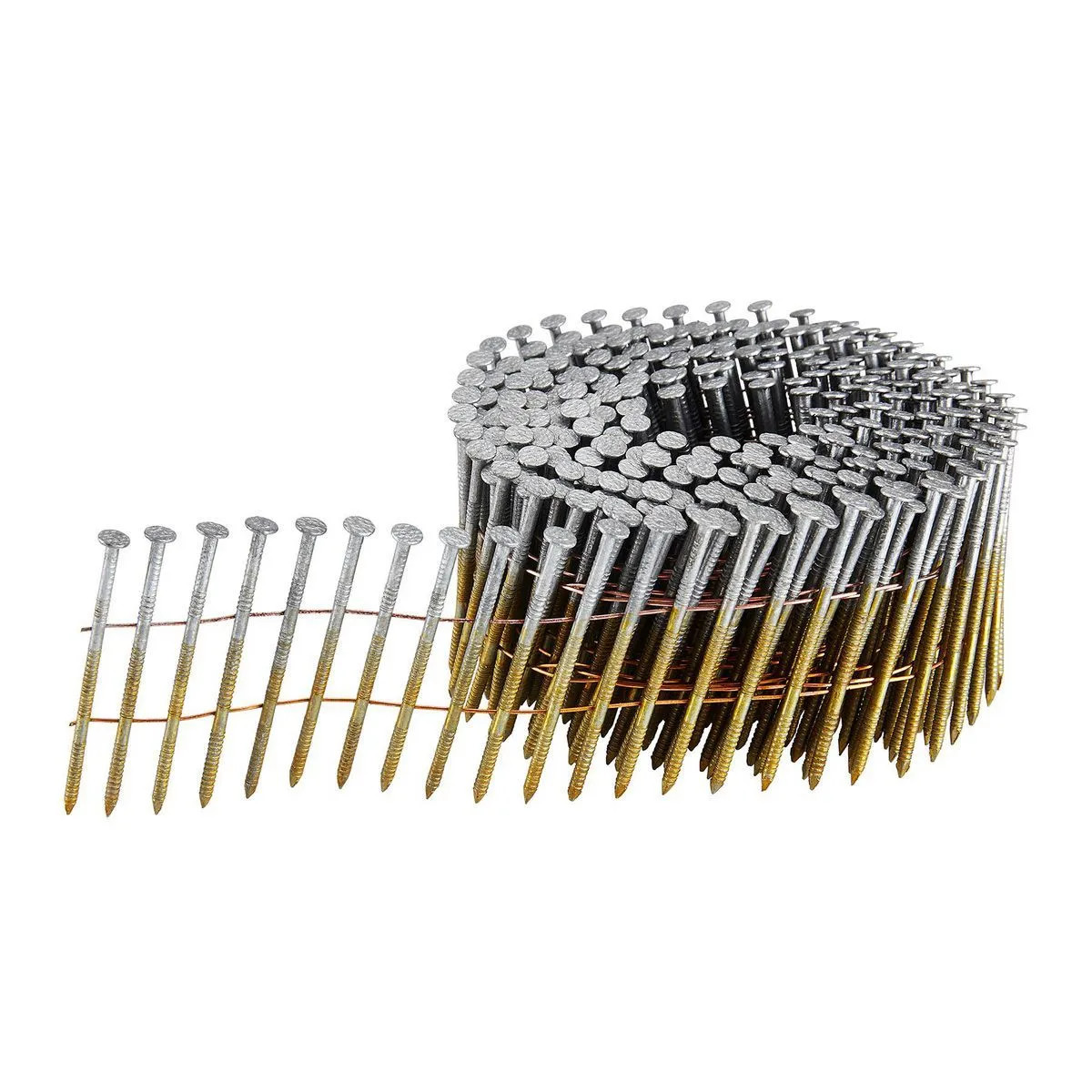
A box marked “construction screws” does not answer the most important question: approved for which connection? A wall stud, a sheathing panel, a joist hanger, and a built-up engineered beam can require different fasteners even when the pieces of wood look similar.
The strongest-looking fastener is not automatically the correct one. A reliable connection begins with the specified fastener, installed in the specified location, into the material and depth the design requires.
Start with the connection rather than the box
For conventional residential wood framing, the 2020 Minnesota Residential Code uses Table R602.3(1) as a fastening schedule and Table R602.3(2) for listed alternate attachments. These tables identify different connections rather than offering one universal nail pattern for a house.
Use the applicable row, footnotes, and project details. Engineered designs and proprietary products can require different fastening. Do not lift a schedule from a deck guide and apply it to an interior beam, or copy a roof-sheathing pattern without checking the roof conditions.
This article intentionally does not supply a substitute fastening schedule. The right answer depends on the member, material, load, connection geometry, and approved design.
Nail names do not tell you every dimension
The familiar “8d” or “16d” designation is only part of the description. Common nails, box nails, and some power-driven nails can have different diameters even when the nominal label sounds similar. Length alone does not establish equivalence.
The manufacturer Weyerhaeuser points out that code fastening tables account for nail dimensions and quantities. Its guidance also warns against assuming screws and nails are interchangeable in engineered-wood connection details.
A practical jobsite check is to compare the fastener package with the written requirement. Record the length, shank diameter, type, coating, and product designation where relevant. If the specified item is unavailable, resolve the substitution before installation rather than after the wall is covered.
Structural screws have specific uses
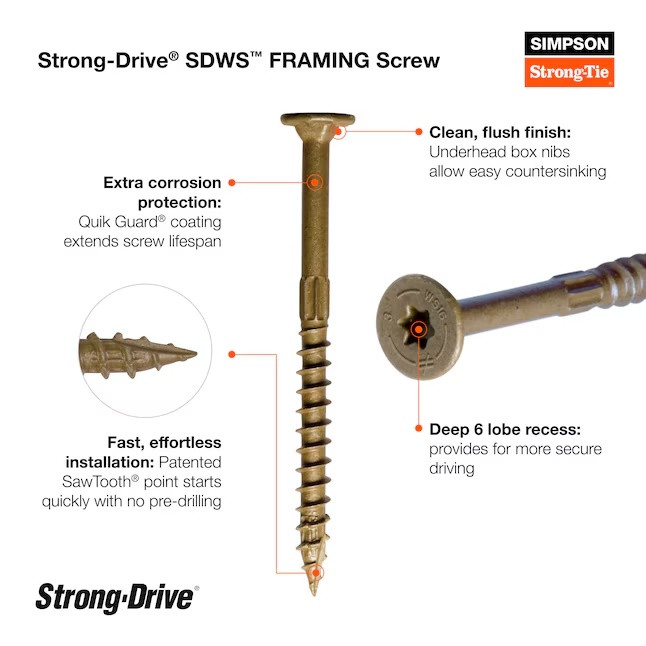
An engineered screw can be an appropriate fastener when the design or accepted product documentation permits it. That does not make every screw a replacement for every nail. A deck screw, drywall screw, or general wood screw is not a universal structural connector fastener.
For example, Simpson Strong-Tie’s installer guidance distinguishes approved connector screws from common screws. It directs installers to the requirements for the actual connector. Other manufacturers have their own instructions and product approvals.
Ask for the evidence behind a substitution: the exact screw, exact connection, applicable evaluation or manufacturer documentation, and any required designer or building-official approval. “We always use these” does not establish an allowable capacity.
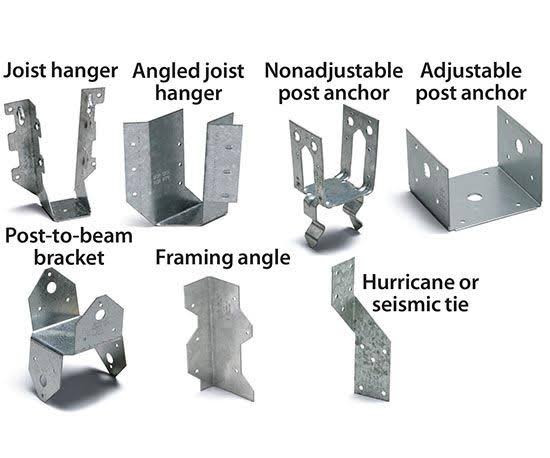
A hanger and its fasteners form a system
A joist hanger’s published capacity depends on more than the metal shape. The supporting wood, fastener length and diameter, number of fasteners, and installation arrangement can all matter. Some holes serve different installation options; follow the exact product instructions rather than a blanket instruction to fill every visible hole.
Inspect the connector model against the plans. Confirm that required fasteners are present in the specified holes and that the connection has not been casually bent, drilled, or modified. For double-shear hangers and other specialized details, a short fastener that looks neat may not provide the required connection.
Where a substitution is permitted, it can carry a different published load. Keep that documentation with the project record and make sure the selected configuration meets the design demand.
Treated wood changes the corrosion question
Section R317.3 addresses fasteners and connectors used with preservative-treated and fire-retardant-treated wood. Minnesota DLI’s deck guidance identifies corrosion-resistant fastener materials for preservative-treated wood and points readers to connector-manufacturer recommendations.
Do not reduce that requirement to “anything galvanized is fine.” Coating specifications, exposure, treatment chemistry, and the compatibility of the connector and fastener need to be checked. For preservative-treated wood, R317.3.1 specifically requires stainless-steel staples.
A sill plate, exposed deck connection, and protected interior detail may not have the same service conditions. Select the full connection for its intended exposure and follow the applicable code, treatment information, and manufacturer instructions, including any permitted exceptions.
Installation quality matters as much as selection
A correct nail that misses the framing does not perform the intended job. Neither does a fastener placed so close to an edge that it damages the connection. Overdriven sheathing fasteners also deserve review because the panel must transfer load through those fasteners.
Set tools for the material being installed and inspect the result. If a problem appears, document its extent and obtain the appropriate correction from the designer or manufacturer. Do not assume that adding an arbitrary number of nails restores a damaged panel or connector.
Keep the evidence easy to find
Before concealment, retain connector details, approved substitutions, relevant product labels, and photographs of important concealed connections. A short connection checklist can prevent a small purchasing decision from becoming a large reopening job.
For a broader walkthrough, use our framing inspection checklist. To discuss an upcoming project, contact Timberline Framing with your plans and location. Clear connection requirements make the scope easier to understand before the work starts.