
Lumber & Materials
Treated vs. Untreated Lumber: Use the Right Wood in the Right Place
Understand where treated lumber belongs, how to read treatment information, and why moisture details and compatible hardware matter in Minnesota framing.
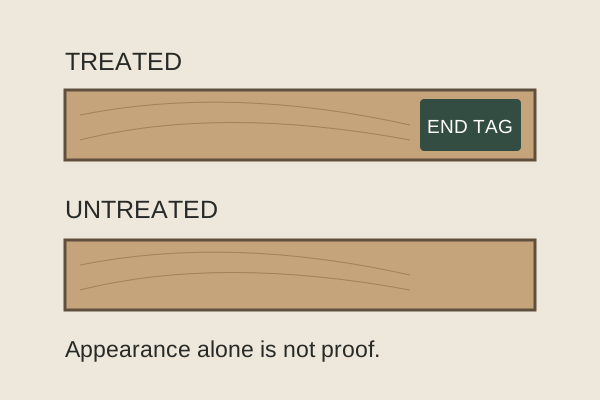
Treated lumber can look like the tougher option in the lumberyard. That does not make it the right choice for every board in a house. The better question is what conditions the wood will face and what protection the design requires.
A dry interior wall, a plate near concrete and an exposed exterior structure do not live the same life. Selecting lumber means matching the material to its job, including its grade, dimensions, treatment where required, and connections.
What treatment does—and does not—mean
Preservative treatment is intended to improve resistance to biological deterioration under specified service conditions. The treatment system and intended use matter. “Treated” is a broad description, not a complete product specification.
Treatment does not make wood waterproof, eliminate movement or turn an ordinary member into a stronger beam. It also does not replace flashing, drainage or drying. A persistent leak still needs to be corrected even when the lumber beneath it is treated.
Fire-retardant-treated wood is a separate product category with a different purpose. Heat-treated markings and kiln-dried markings also should not be mistaken for preservative treatment. Similar-sounding words on lumber can answer very different questions.
Let exposure drive the choice
Many enclosed framing members are intended to remain dry in service and are commonly made from untreated structural lumber. Other locations require decay protection under the applicable code and design. Conditions near concrete or masonry, near the ground, or exposed to weather deserve specific attention.
Do not reduce that to “every board touching concrete must be the same product.” The assembly, moisture separation, exposure, code provisions and product approvals determine the detail. Ask the builder to identify the specified material for each affected location and explain how moisture is managed there.
For an exterior application, an above-ground designation is not the same as a ground-contact designation. Some difficult-to-dry or difficult-to-replace conditions can demand more protection than a casual glance suggests. The American Wood Protection Association’s use-category system organizes treatment choices by service conditions and deterioration hazard.
Read the tag, not the color
Color is not dependable evidence of the treatment specification. Preservatives and dyes vary, and weathering changes appearance. Keep the treatment label or a clear photo of it with the project records.
Useful information can include the intended use, preservative, use category, retention and treating company. The structural grade mark answers another set of questions about the lumber. A treatment label and a structural grade mark complement one another; one does not replace the other.
If a proposed substitution is described only as “the same size, but treated,” ask for the complete product identification. The designer or responsible builder needs to verify the properties that matter, including any treatment-related design considerations.
The hardware must belong to the same system
Some preservative treatments and wet environments can increase corrosion risk for metal connections. Connector and fastener selection should follow the hardware manufacturer’s guidance for the actual treatment and exposure.
A galvanized-looking finish is not enough information. Coating specifications differ, and connectors and fasteners need to be compatible with one another. Replacing a specified fastener with a convenient screw can change both corrosion resistance and structural performance.
This is a useful estimate question: “Does the framing package include the specified corrosion-resistant connectors and fasteners for the treated material?” It is easier to settle at purchasing than after a mixed collection of hardware has been installed.
Cuts, drying and the next trade
Field cuts and holes can require additional treatment under the product instructions and applicable requirements. Have the installer address that work rather than assuming the original pressure treatment settles every exposed surface.
Also ask about moisture. Treated material may arrive with substantial moisture depending on the product and drying process. It needs appropriate handling and evaluation before it is enclosed or receives sensitive finishes. Buying treated lumber is not a reason to skip the drying conversation.
For a Minnesota project that encounters rain, snow or slush during construction, the goal is to limit wetting, provide drying and assess conditions before covering them. Outdoor storage and indoor service are different stages of the same board’s life.
Questions to keep the purchase honest
- Which locations require treated or otherwise decay-resistant material?
- What treatment designation is specified for each exposure?
- Are the grade and size also correct for the structural design?
- Which connector and fastener coatings match the product?
- Who handles field-cut treatment and checks moisture before enclosure?
The right wood in the right place beats the most impressive label on the rack. Good durability comes from the material, the connection and the moisture detail working together.
Sources behind this guide
- Use Category System — AWPA web guidance accessed October 26, 2026
- Use Category System: User Specification for Treated Wood — AWPA U1-24, 2024 public excerpt; edition consulted, not asserted latest
- Treated Wood Preservatives and AWPA Use Categories — Viance manufacturer web guidance accessed October 26, 2026
- Corrosion Information for Wood Connectors & Fasteners — Simpson Strong-Tie manufacturer web guidance accessed October 26, 2026